

Backtests vs live results: insights from Live Bot Arena
Backtests show only part of the picture. Live Bot Arena reveals how trading bots actually perform and why optimization makes the difference.
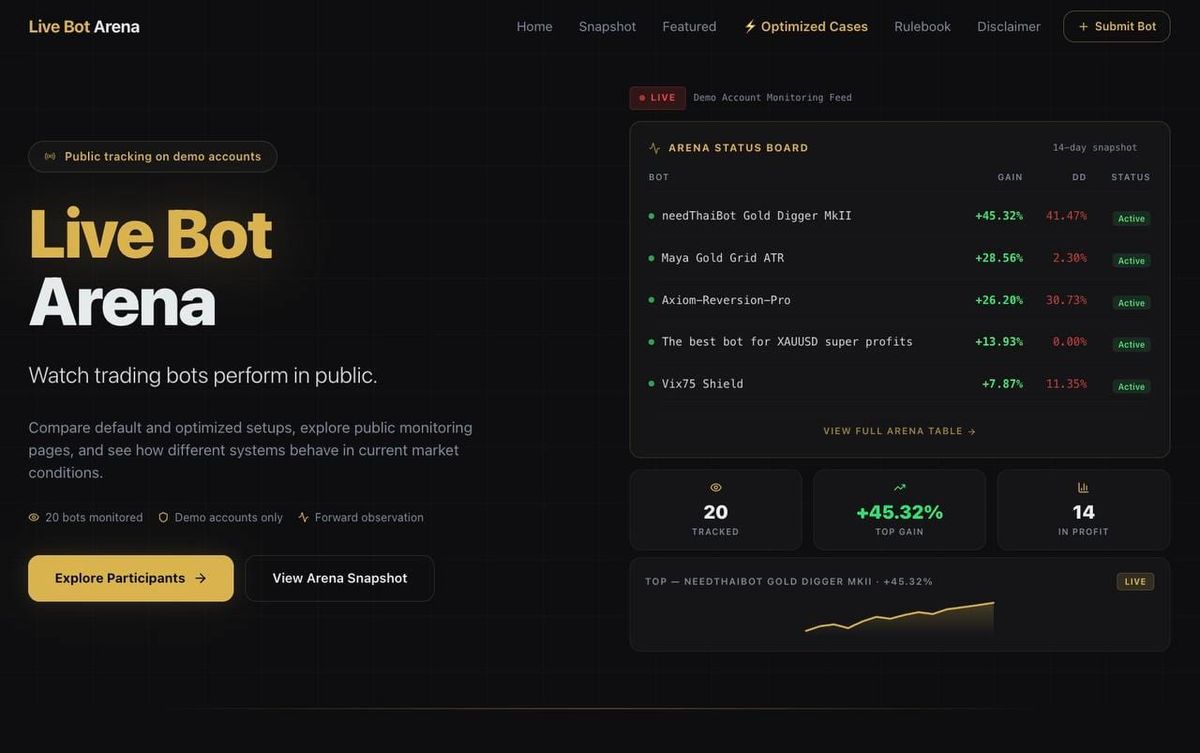
Backtesting has long been the default way to evaluate a trading strategy. It shows how a system behaved in the past and helps traders build expectations. But markets do not stay the same. Conditions shift faster than historical models adapt, and even a well built backtest reflects only part of the picture.
On Live Bot Arena, multiple trading bots run in public live conditions where anyone can observe their performance in real time across different instruments and setups. Instead of relying only on historical curves, traders can look at how these systems behave in current market conditions.
— public live tracking of multiple trading bots
— all bots run simultaneously in the same market conditions
— performance across different instruments and timeframes
Explore how different trading strategies behave in the same market conditions
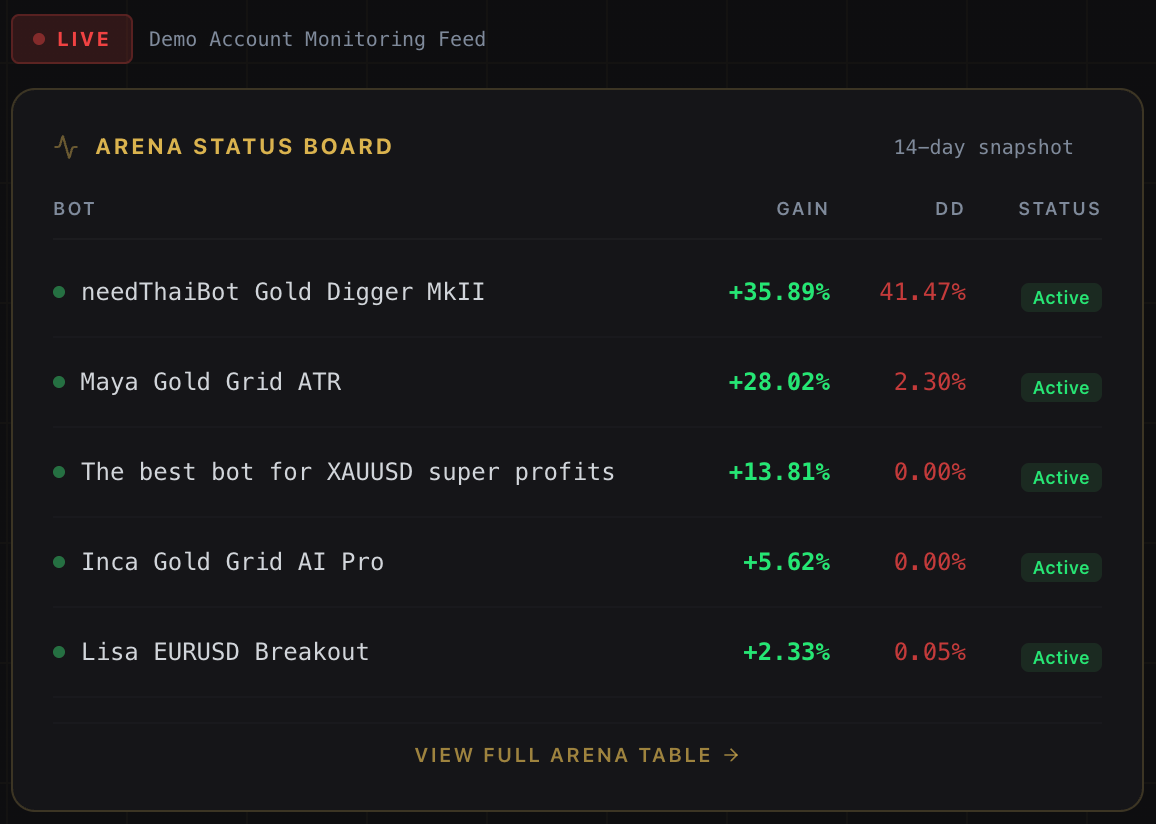
On Live Bot Arena, multiple trading bots run simultaneously under the same market conditions. This makes it easier to compare how different strategies behave in real time. Instead of looking at isolated results, you can see a full range of outcomes across instruments and setups. Some bots show steady growth, while others experience drawdowns or unstable performance.
This becomes especially useful during volatile periods. When gold moves sharply or market conditions shift, the differences between strategies become visible much faster than in a backtest. Rather than relying on a single equity curve, you can observe how each system reacts to the same environment as it unfolds.
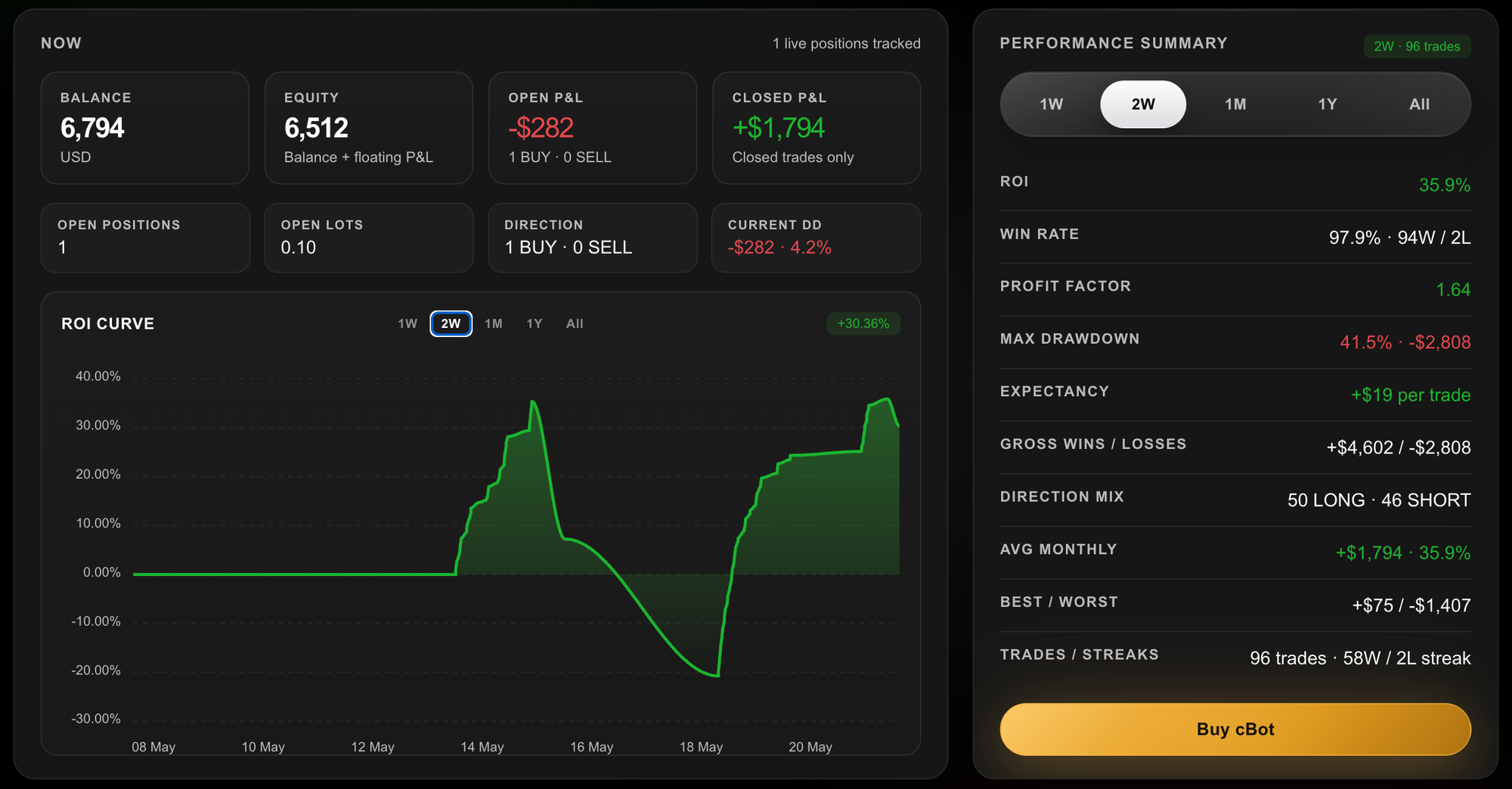
For traders, this creates a practical advantage. It becomes possible to observe how a bot behaves in live conditions before making a decision, instead of relying only on historical results or product descriptions.
At the moment, 15+ bots are being tracked on the platform, each running in live conditions with publicly available performance data.
The platform also provides a snapshot that highlights key metrics such as top performers, trading activity, best with low drawdown and highest drawdown, giving a quick overview of how different systems are behaving at a given point in time.
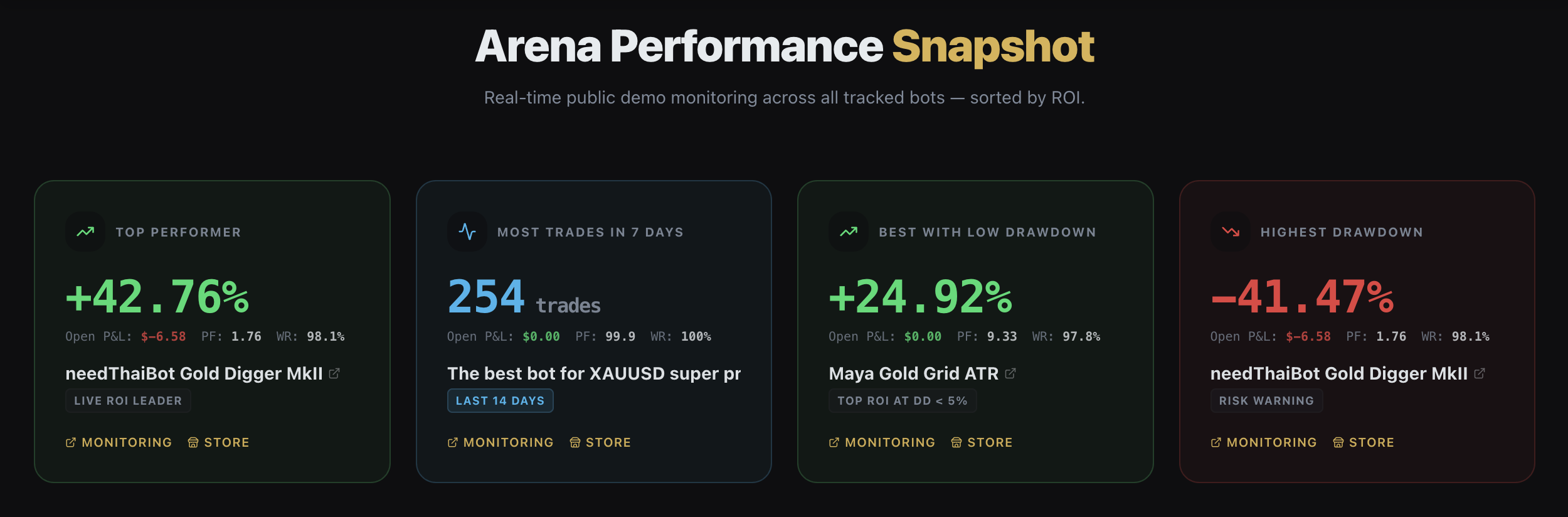
See current performance across all tracked bots
Why optimization changes everything
Optimization plays a central role in how trading bots perform in real conditions. The same strategy can produce very different results depending on how its parameters are configured. Default settings provide a general baseline, but they are not designed for specific market environments, instruments or execution conditions.
For example, in the baseline backtest, Inca Gold Grid AI Pro shows unstable performance with a final result of -51.02%. The equity curve moves inconsistently, with sharp swings and a breakdown toward the end.
After optimization, the same bot behaves very differently. The result reaches +602.29%, and the equity curve becomes steadily upward with more controlled pullbacks.
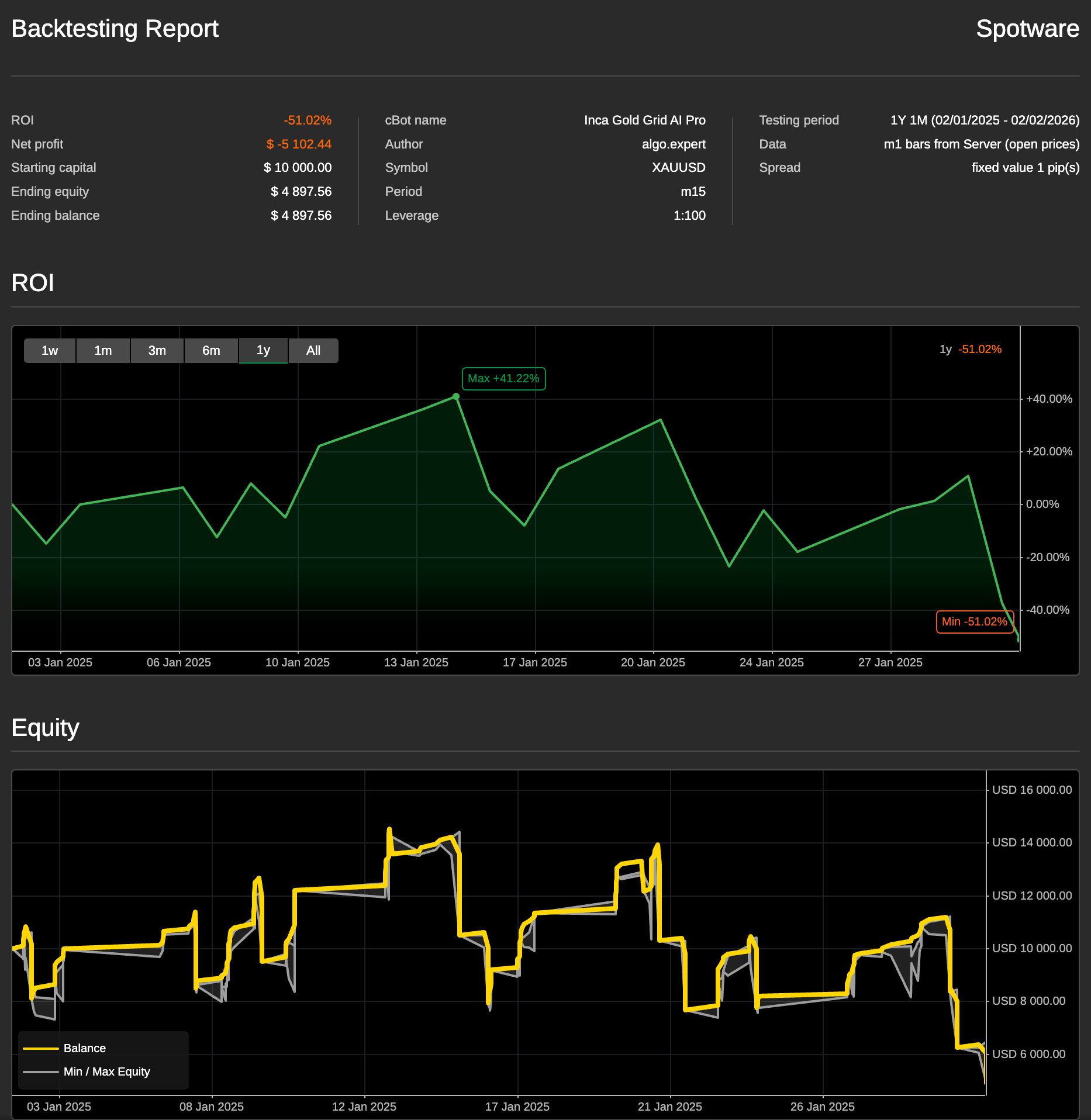
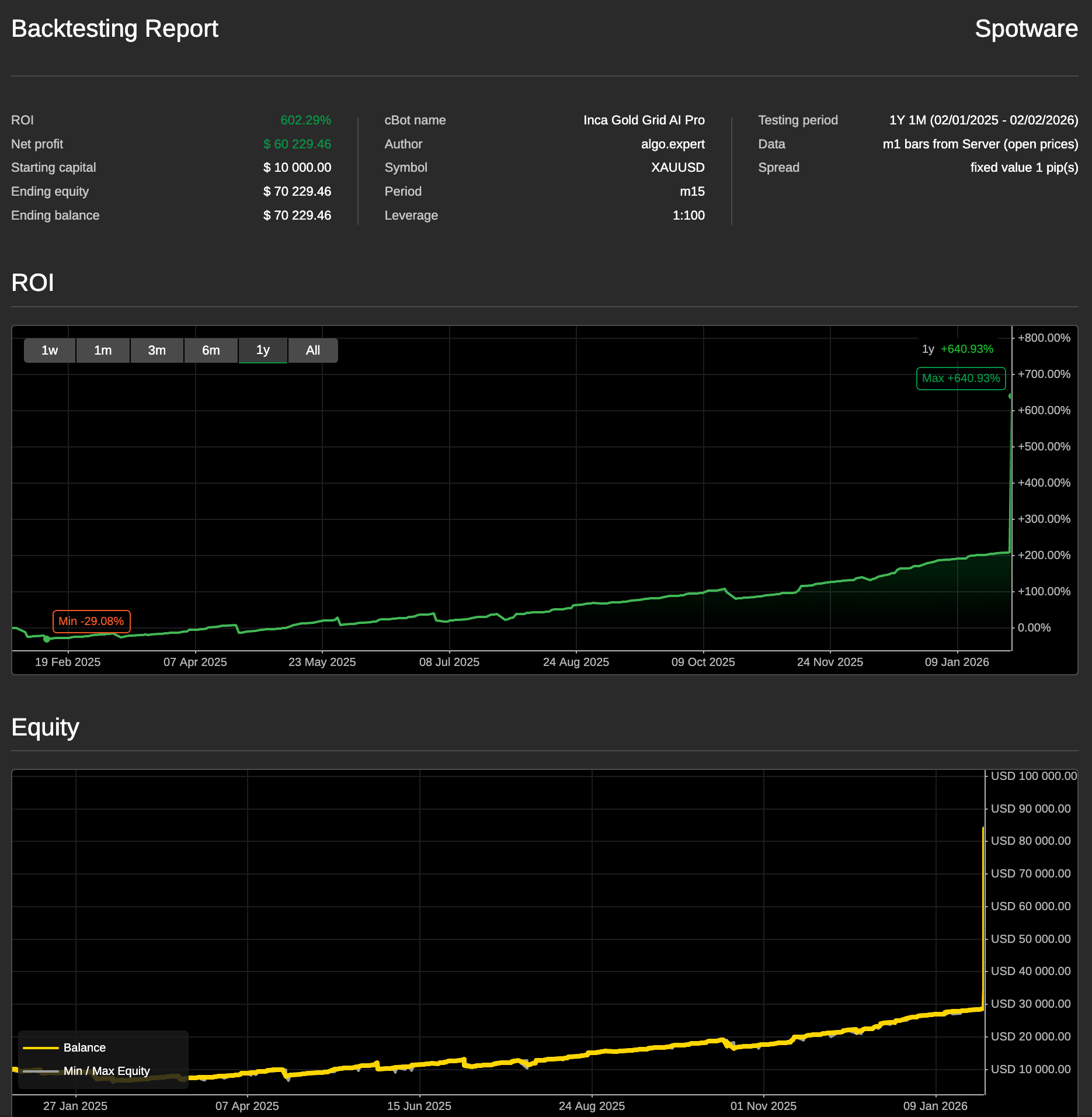
Inca Gold Grid AI Pro before and after optimization
For a detailed breakdown of the Maya and Inca case, see the article below.
 Aleks Kozlov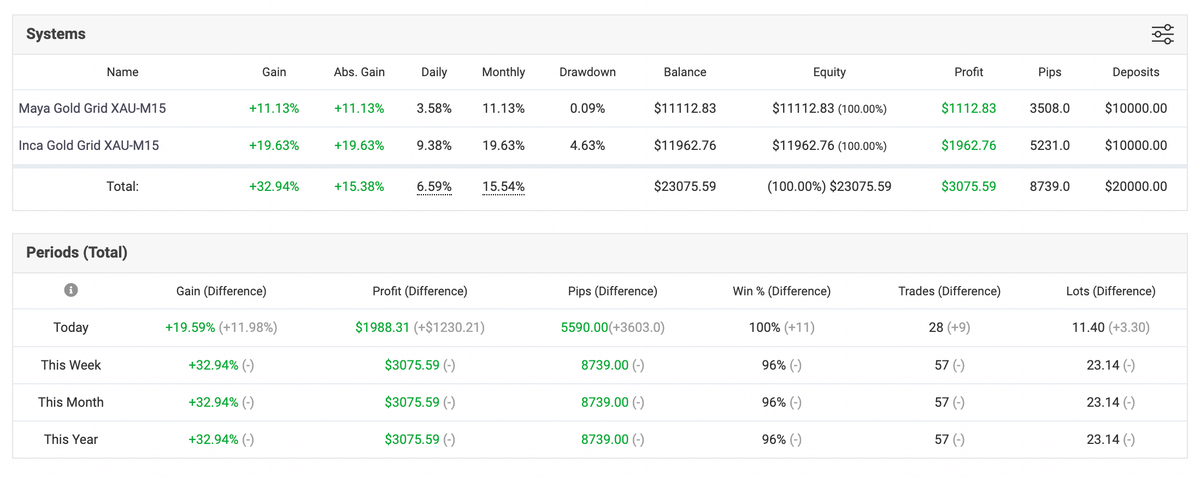
The strategy itself remains the same, but its parameters are adjusted to better match market conditions. This directly affects how the system performs over time.
See which setups are currently leading the performance chart
Key takeaways
— consistent performance requires continuous testing and adjustment
— default settings act only as a baseline
— optimization defines how a trading bot performs in real conditions
— small changes in parameters can significantly alter results
On Live Bot Arena, you can also find configuration files prepared for optimization, available for free download. These setups can be used as a reference point to study how parameters are adjusted in practice and how they impact performance.
From backtests to real performance
Live observation on Live Bot Arena can teach more than backtesting alone. It highlights aspects of strategy behaviour that are often overlooked when relying only on historical results.
This shifts the focus from idealised results to actual behaviour, making evaluation more practical.
See how strategies behave in real market conditions
 Aleks Kozlov
 Aisylu Chanysheva
 Aisylu Chanysheva


Comments ()